
Accumulated stress is one of the great challenges of modern daily life
We live at an increasingly fast pace. Screens, hurry, noise. And even though we barely notice it in the moment, that continuous tension leaves its mark on the body: worse sleep, slower digestion, the feeling of never quite catching up.
One of the simplest practices many people are rediscovering to feel calm again is grounding, also known as earthing.
What is grounding?
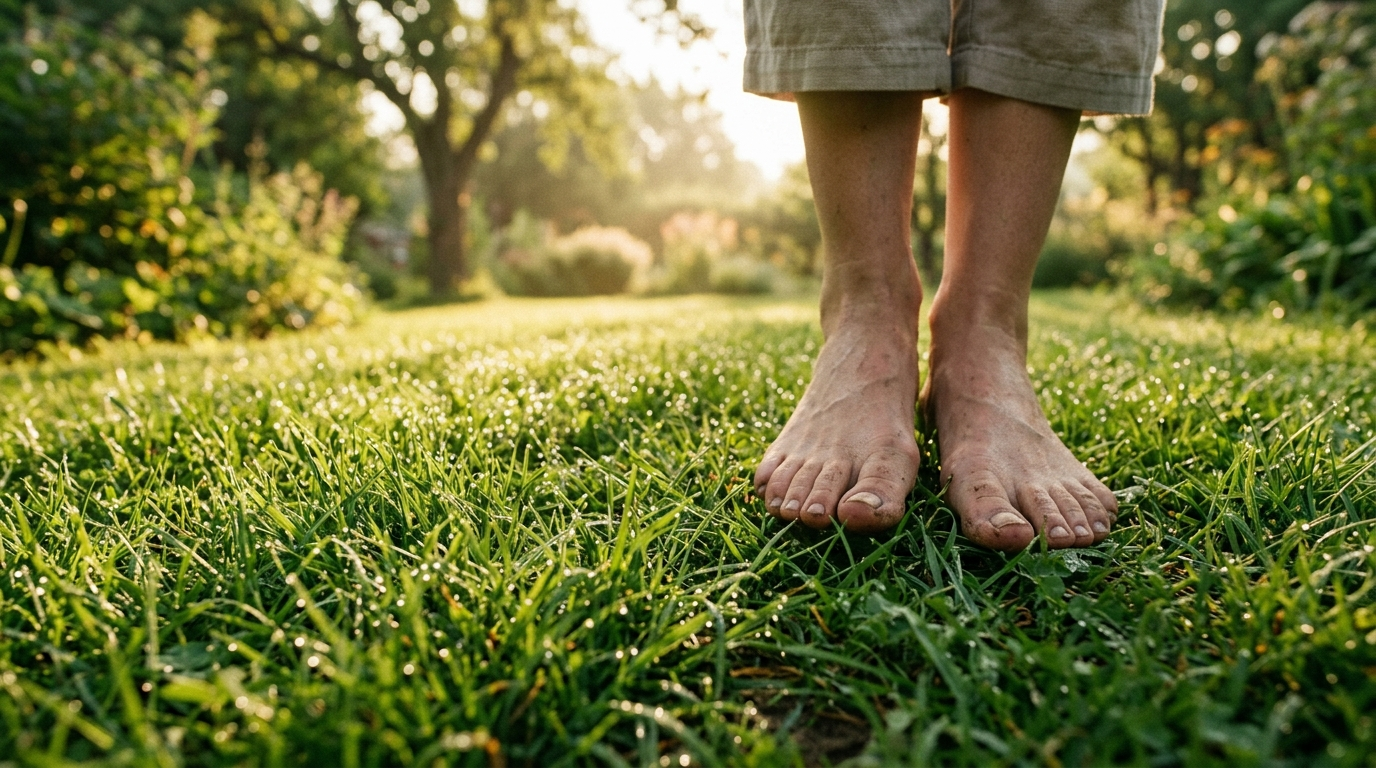
It's exactly what the name says: putting your bare feet in direct contact with nature — on grass, soil, or sand.
The key detail is being barefoot: the rubber soles of shoes act as an insulator and prevent that direct contact between your body and the surface of the earth.
It's not a new practice. Humans have done it naturally for thousands of years. The only thing that's changed is that today we spend almost the whole day on artificial floors, in insulating footwear, with our bodies continuously exposed to the electromagnetic fields of phones, Wi-Fi, screens, and electrical devices.
Why more and more people are practising it
When we ask the people who have already added grounding to their routine, the comments tend to overlap on very concrete, very everyday things:
- A feeling of greater calm and serenity afterwards.
- A night's sleep that feels deeper.
- An easier time "switching off" from digital noise.
- A real pause in the day — no screen, no rush.
These aren't miraculous results: they're the logical effects of stopping, breathing, and literally putting your feet back on the ground.
How to do it (it's simpler than it sounds)
You don't need any equipment, special clothes, or much time:
- Find an area of grass, soil, or sand.
- Take off your shoes and socks.
- Plant your feet fully on the ground.
- If you like, sit or lie down. That works too.
- Stay there for 10 to 20 minutes. Breathe calmly.
You can do it on a beach, in a park, in your garden, or even on a balcony with a large planter. What matters is that the contact is direct, not through a sole.
Video: Frank Suárez explains grounding (Spanish)
Combine it with habits that are already taking care of you
Grounding works best when it sits alongside the other things you're already doing well:
- A balanced way of eating — like the 3x1® Diet we teach at NaturalSlim.
- Daily movement: walking, stretching, whatever you enjoy.
- Adequate hydration, spread through the day rather than all at once.
- A good magnesium intake. MagicMag® magnesium citrate contributes to the normal functioning of the nervous system and to a reduction of tiredness and fatigue.
An invitation: try 15 minutes today
There's nothing to buy and nothing to prove. Just take your shoes off, step outside, and spend 15 minutes barefoot on the earth. Start this afternoon if you can, and see how you feel afterwards.
If you'd like to take a further step and support your metabolism from the inside while you build these habits, our team of Certified Metabolism Consultants at NaturalSlim Europe is here to guide you.


Share:
Estos son los beneficios del café
What magnesium citrate is for: benefits, uses and what you need to know